Show Up Like a Pro (Even If You’re Just Starting Out)
When you work for a company, a lot of the “professional stuff” comes built-in. You get an email address, a phone number, maybe even a nice office with plants that aren’t fake. But when you work for yourself? You’re the boss—and the IT department, and the marketing team, and the person responsible for ordering your own pens.
And while you can technically run your business from the couch in your sweats, if you want clients to take you seriously, it helps to look the part. That doesn’t mean pretending to be something you’re not—it just means putting a little polish on the things people see.
Here are 5 easy, budget-friendly ways to make your solo business look buttoned-up and professional—without losing your personality:
1. Upgrade your business card
Free cards with ad logos on the back? Nope. Jagged edges from your home printer? Double nope.
Your business card still matters—especially at local events and in-person networking. Have one designed (yes, by a real designer!) and printed on nice, sturdy cardstock. It doesn’t have to be fancy, just clean, current, and confidence-boosting.
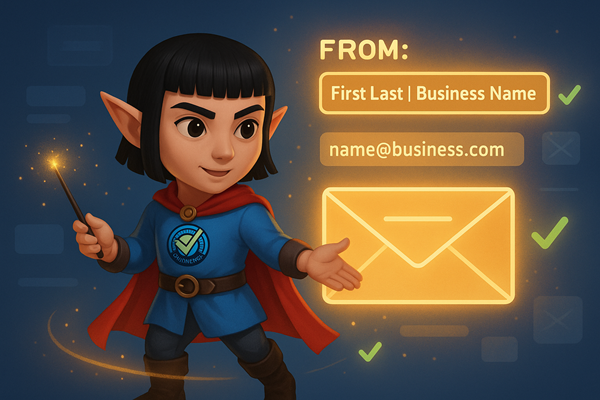
2. Use a “real” email address
If your email still ends in Gmail, Yahoo, or Hotmail… it might be time for an upgrade.
Using your own domain (like you@yourbusiness.com) shows you’re established and intentional. It takes just a few steps to set it up once you have a website domain, and it sends a subtle but strong message: “This is my business, and I’m here for the long haul.”
3. Get a fresh headshot
Not the cropped selfie from your cousin’s wedding. A real, professional headshot.
You’ll use it more than you think—on your website, LinkedIn, speaking bios, guest blog posts. It doesn’t have to cost a fortune, but it should look like you showed up on purpose. (Bonus: it’s a fun excuse to get dressed up and feel great.)
4. Keep things consistent
Every time someone interacts with your brand—whether it’s a brochure, a PDF, or your Instagram feed—they should get the same vibe.
Use consistent colors, fonts, and language across your materials. Think of it like your business’s wardrobe: it’s easier to look pulled together when everything matches.
5. Invest in the right tools
No, you don’t need the fanciest tech on the market. But you do need the basics—like a reliable laptop, a good webcam if you do virtual meetings, and a workspace that feels like yours.
Also worth the splurge: software that makes your business life easier. Whether it’s bookkeeping tools or scheduling apps, these investments save you time, stress, and yes, money in the long run.
These simple shifts don’t take much time—or money. But they do make a big impact on how you show up in the world. And more importantly, they help you feel like the legit, capable business owner you already are.
You’ve got this!
If you’re ready to move from maintaining to growing, I can help you get there. Let’s talk!