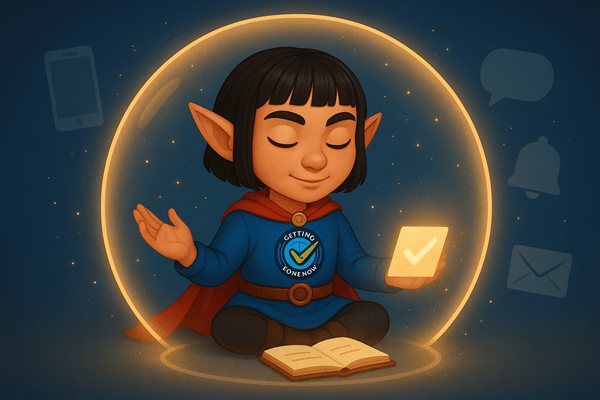
The Case for Strategic Disconnection
Focus isn’t about willpower—it’s about designing space away from the noise.
If you’ve ever tried to finish an important project while your phone buzzed, your inbox pinged, and Slack lit up like a pinball machine, you know how hard it is to stay focused in today’s world. The problem isn’t your discipline—it’s your environment.
That’s where strategic disconnection comes in. It’s the conscious choice to step away from the noise so you can give your best attention to the work that matters most.
Here’s how to make it work:
- Silence the noise.
Turn on Do Not Disturb, close your inbox, and mute notifications. Protecting your focus starts with quieting the digital chatter. - Create a “focus zone.”
Pick a spot that signals concentration—a tidy desk, a quiet café, or even a digital workspace with nothing open but your task list. The environment should cue your brain: this is where I get things done. - Use time containers.
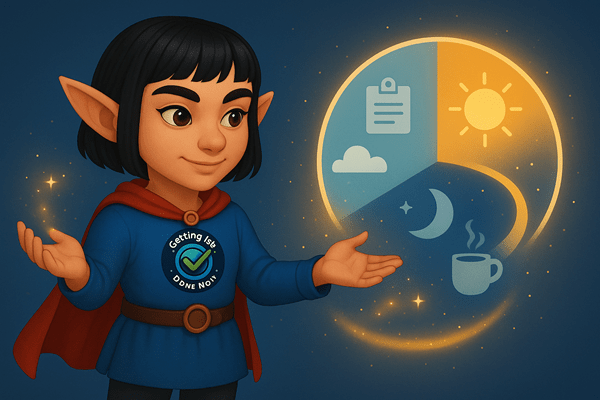
Try a 25-minute Pomodoro session or a 90-minute deep work block. Setting clear boundaries helps your mind settle in and makes it easier to resist distractions. - Guard the time.
Treat your focus session like a client meeting. Put it on your calendar. Let others know you’re unavailable. And most importantly—respect it yourself.
Big ideas, deep projects, and meaningful progress don’t thrive in constant interruption. They need space. They need quiet. They need you, fully present.
Sometimes the most productive move isn’t pushing harder—it’s stepping away.
Feeling stretched too thin between business and life? Let’s find ways to make both work better together. Book your free 30-minute consult now.