Budget Your Time Around Your Energy
One thing I’ve learned about running a business (and staying sane while doing it) is that time isn’t really the thing we’re trying to manage. It’s energy. Time is measurable, sure, but energy is what determines whether that hour feels productive or impossible.
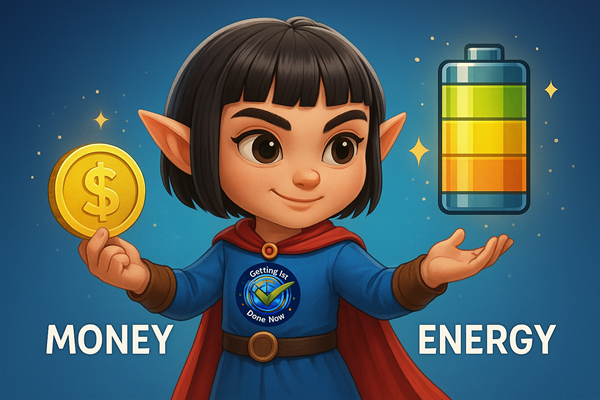
I actually wrote an article for Under 30 CEO about this idea because it has shaped how I work more than anything else. The simplest way to put it is: treat your time the same way you treat your money. It’s valuable. It’s limited. And if you don’t budget it with intention, it disappears into places you didn’t mean to spend it.
A big shift for me was building my week around my energy patterns, not just my to-do list. I know when my brain is sharpest and when it’s basically mashed potatoes, so I plan accordingly. High-focus tasks like client work and strategy get the hours when I have the most clarity. Lower-stakes tasks like networking events or content batching get the times of day when I’m naturally more relaxed.
I also hold firm “open” and “closed” hours for my workday. When I’m done, I’m done. And I use very simple cues to make that boundary real: I close the laptop, dim the lights, and turn on something comforting — usually music or a TV show that signals to my brain that it’s safe to let go. Those tiny rituals matter more than we think.
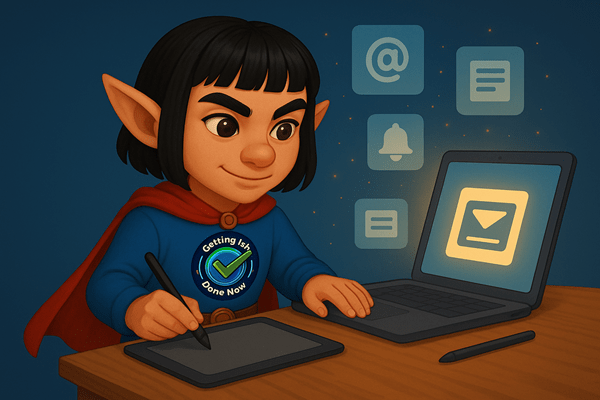
As a neurodivergent entrepreneur, I know how easy it is to slide straight into hyperfocus and forget that the rest of the world exists. So instead of fighting my brain, I built structure as a safety net. Automated reminders. Recurring breaks. Gentle digital prompts that tap me on the shoulder and say, “Hey… breathe.” These systems aren’t restrictions. They’re support.
Work-life balance isn’t about doing less work. It’s about protecting the energy you need to do meaningful work without burning out in the process. When you design your schedule around how your brain and body function best, life feels less like a sprint and more like a rhythm. And that rhythm leaves space for both productivity and peace.